The Bulova Marine Star 96B256 is one of the best-looking steel sports chronographs under the radar: blue dial, six-hand calendar layout, solid bracelet with a proper safety clasp, and 100m of water resistance. The catch is the sticker — $550 retail for a Miyota quartz with a mineral crystal.
Here is the good news: almost nobody pays that. Bulova's own store runs it at $440 and the grey market sits at $200–$330. But if you are cross-shopping at the real-world price, these seven alternatives deserve a look first.
Why the Marine Star Gets Cross-Shopped So Hard
At its $200–$330 street price the 96B256 is genuinely competitive: brand-name backing, a handsome blue sunray dial, and bracelet hardware (pushers, safety bar, extender) that budget chronographs skip. It is the kind of watch that wins on the wrist, not the spec sheet.
At its $550 retail, though, the comparisons get brutal — sapphire crystals, solar movements, and even Swiss names enter the chat. The alternatives below are organized around that reality: what else your money buys at both price points.
What to Look for in a Marine Star Alternative
- Match the real price: compare alternatives against the $200–$330 street price, not the $550 sticker.
- Crystal: mineral is common here; sapphire exists under $150 if you know where to look.
- Movement: quartz chrono is standard; meca-quartz gives a mechanical-feel sweep.
- Water: 100m is the sports-chrono norm — fine for swimming, not diving.
- Bracelet hardware: micro-adjust and solid clasps are rare under $300; check reviews.
The 7 Best Bulova Marine Star Alternatives
Citizen Brycen Chronograph
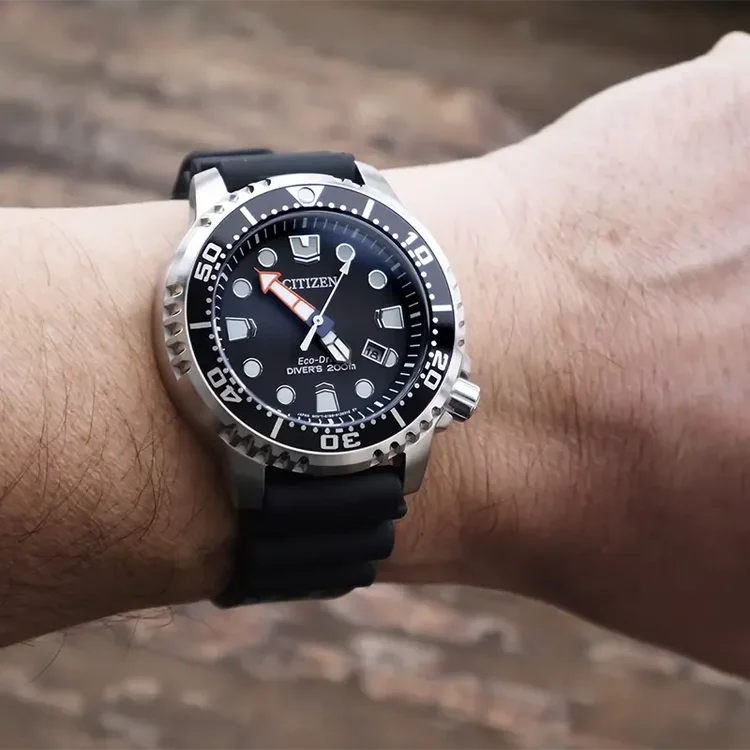
The most direct rival: Eco-Drive solar chronograph, 100m, never needs a battery, typically $200–$280. The Marine Star wins on bracelet hardware; the Brycen wins on ownership convenience. Pick on dial.
Casio Edifice Chronograph
The value institution: tachymeter-styled steel chronos from about $70–$130 with 100m and Casio reliability. The EFV/EFR lines give you 80% of the Marine Star look for a third of the street price.
Pagani Design PD-1701
The spec-sheet bomb: sapphire crystal, ceramic bezel, and a meca-quartz movement whose chrono seconds sweeps like a mechanical — for $80–$120. Speedmaster-styled, unapologetically.
Bulova Lunar Pilot 96B258
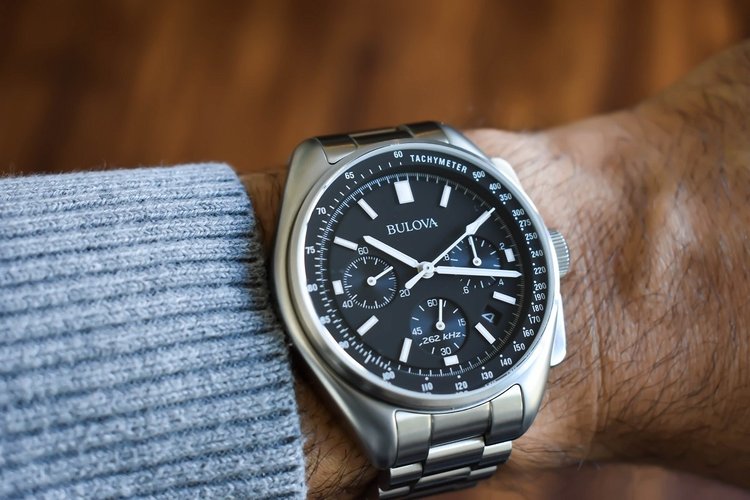
The in-house step up: real Apollo 15 history, a 262kHz movement with a sweeping chrono hand, and sapphire — at $450–$600 street. If you are already considering the Marine Star at full retail, read our Lunar Pilot reference page first.
Timex Waterbury Chronograph
The vintage-leaning pick: clean dial, Indiglo, leather strap, around $100–$150. Less sporty than the Bulova, more office-friendly, and half the price.
Invicta Speedway
The budget brute: big steel chrono presence for $60–$90. Mineral crystal and quartz like the rest of the tier, with Invicta's usual aggressive styling. Buy it for the look per dollar, nothing more.
Citizen Eco-Drive Chronograph (AT series)
The quiet professional: atomic-clean dials, sapphire on many variants, Eco-Drive, 100m, frequently $180–$280. The pick for buyers who want one chrono that dresses up and down.
How They Compare
At street price the 96B256 holds its own against the Brycen and Citizen AT on bracelet quality and dial finishing, while the Pagani PD-1701 embarrasses everyone on pure specs. At retail the calculus inverts — the Lunar Pilot becomes the obvious Bulova to buy. Our advice: set a $330 ceiling for the Marine Star and it becomes a genuinely good deal.
Frequently Asked Questions
Is the Bulova Marine Star worth it?
At $200–$330 street, yes — a well-finished brand-name sports chrono. At the $550 retail, no — that money buys sapphire and better movements elsewhere, including Bulova's own Lunar Pilot.
Is the Marine Star a dive watch?
No — despite the name, 100m with a fixed bezel and no screw-down crown is a swimming rating. Bulova's ISO-rated divers live in other lines.
Marine Star vs Lunar Pilot — which Bulova?
The Lunar Pilot costs ~50% more at street and gives you sapphire, the 262kHz smooth-sweep movement, and genuine Moon history. The Marine Star is the better pure value; the Lunar Pilot is the better watch.
What movement is in the Marine Star 96B256?
A Miyota 6S20 quartz — a proven six-hand calendar chronograph caliber. Accurate and cheap to maintain, with a ticking (not sweeping) chronograph seconds.
The Verdict
The 96B256 is a buy at its real-world price and a pass at retail — full specs and the current market range on our Marine Star reference page. For a solar alternative the Citizen Brycen leads; for pure specs the Pagani PD-1701 is untouchable; and if your budget is actually $550, our Bulova Lunar Pilot reference shows why that is the smarter Bulova.